Foundation training: where to start and what comes next
 Tobias Gustavsson

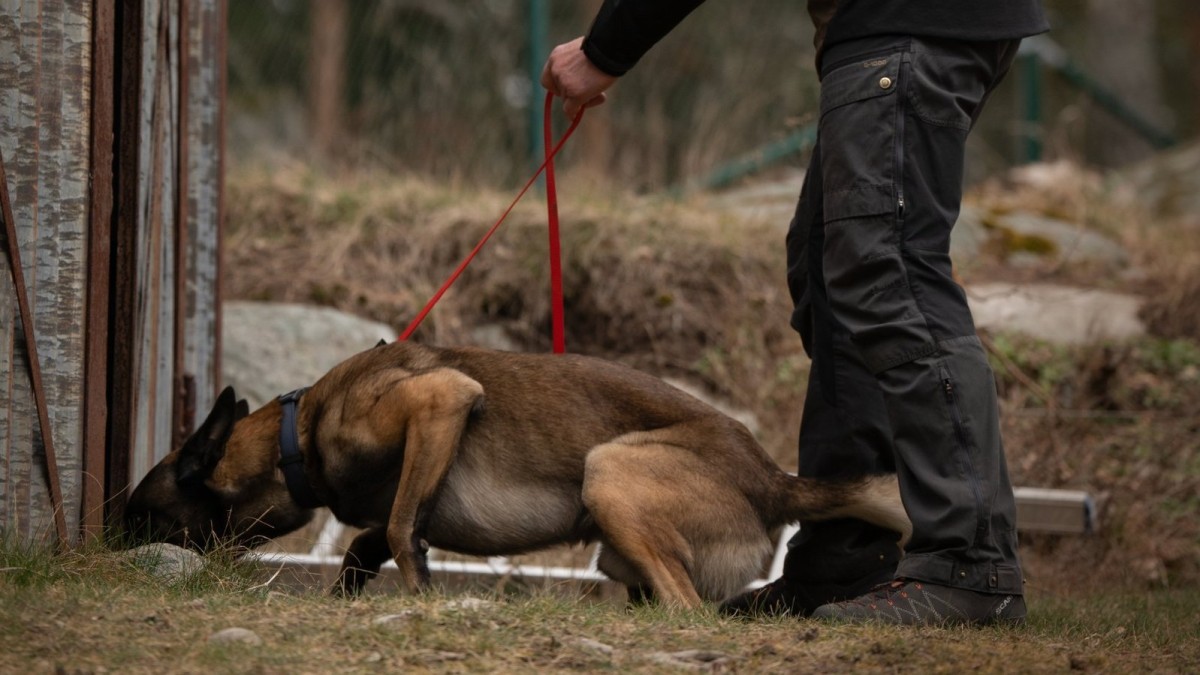
The order of foundation training for scent work: where to start, what to avoid, what to train in parallel, and where this series goes next.
Training a dedicated scent work dog takes patience. How long it takes depends on the individual dog, but the order of the training phases does not. We are very thorough about that order, because each phase builds on the one before it.
This post is the overview: the phases of foundation training, when to start each one, and what can be trained in parallel. Each phase then has its own post in this series, covering what to aim for and what to watch for, with links to the webinars and courses that teach it step by step.
Is scent work for every dog?
Every dog can learn scent work, and so can every handler. Whatever your dog's background, you can progress through the training together and have a lot of fun along the way.
Working as a detection or tracking dog is a different matter. Not every dog has what it takes to work long days under demanding conditions. What to look for when choosing a future working dog is the subject of our webinar Selection of working dogs.
The foundations are the same either way. What differs is how far you take them.
The phases at a glance
Every dog we develop goes through the same phases, in the same order. Once your dog's behavior in one phase is solid, you can start the next one and train the two in parallel. One phase, play and reward development, never ends: keeping your dog motivated for its rewards is crucial to keeping it motivated for the task.
- Play and reward development. Strong, reliable rewards come first. Everything later depends on them.
- Search development. First the motivation for searching and finding, then detailed searching with a high sniffing frequency.
- Indication training. Trained as a separate exercise, after search development or in parallel with it. The exercises depend on the type of indication you choose to train.
- Systematics. Once the dog's searching and indication are solid. The search system and patterns depend on the work the dog will do.
- Maintenance. All of the above, throughout the dog's working life.
The methods are the same whether you start with a puppy or an older dog, and whether the dog will work in scent detection or tracking. With a puppy, the choice of toys and the way you play need some extra thought, both before and during teething.
Training for tracking?
Play and reward development, search motivation and a clean indication matter just as much on a track.
A tracking dog follows a person’s scent from their footsteps to find and indicate small items, while a detection dog detects one or more target scents anywhere in the search area. The sniffing technique and the indication are similar, but they are used in different contexts, and the same dog can do both disciplines.
Want the whole picture in one go? Our introductory webinar walks through every phase of detection training, from the foundations to operational work.
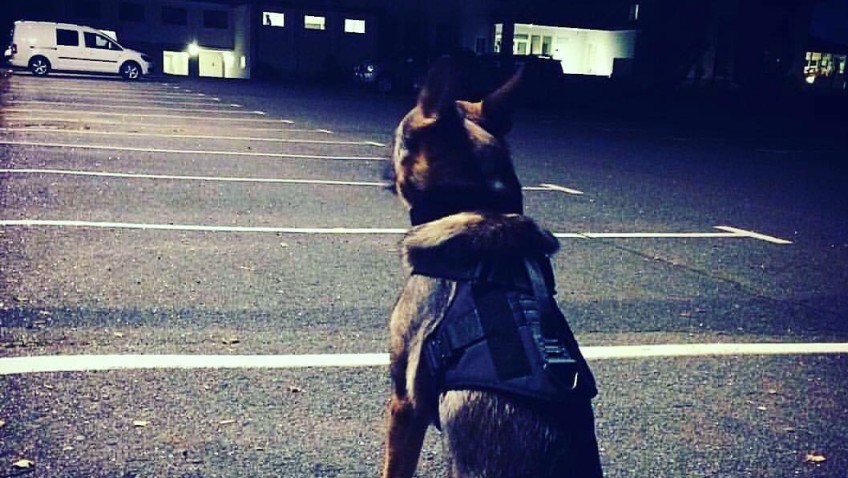
The rest of this post sets out when to start each phase, and how the phases run in parallel.
When to move on, and what runs in parallel
Play and reward development
Training always starts here. Start search development once your dog shows high motivation for chasing and biting the toy; play and reward training continues alongside it.
Read more: Play and reward development
Search development
Search development has two stages, trained in this order: first the motivation for searching and finding, then detailed searching with a high sniffing frequency.
Foundation training has to be effective, and that means training often. Using the real target material for this would be complicated, which is why we use toys and pieces of toys instead. With toys, we can train anywhere without any safety or logistical issues. And since the dog’s motivation for the toy is high from the start, we can quickly build solid foundation skills and focus for the task before moving on to the target scent.
Read more: Search development
Indication training
Indication training can start after search development, or in parallel with it as a separate exercise, once your dog shows high motivation for the toy. The biggest risk is connecting the indication to the search too early: wait until your dog shows very high motivation for searching, finding and biting the toy.
Read more: Indication training
Systematics
Once your dog has a solid searching behavior and a solid indication, it's time to start systematics. What kind of systematic search to train depends on the job your dog will do. The target material, the environment and the context are examples of what to consider when deciding how to deploy your dog most effectively. It can be anything from free search without a set pattern, to semi-systematic search, to detailed systematic search on leash.
Read more: Systematics
Three common mistakes
1. Training on the end goal, not for the end goal. Each session needs one clear purpose: establishing a search behavior, imprinting, or something else. Behaviors are connected later, once each one has had enough separate training.
2. Starting indication training first, or too early. Indication training rewards passivity. Started early, it can slow your dog down, and it's a very common cause of false indications.
3. Rewarding in a way that makes the dog look away from the find. A dog that turns to the handler at the find is waiting for the reward to come from there, and its focus leaves the find. How the reward is delivered at the find is part of search development.
Mistakes 2 and 3 are both avoided by following the order of the phases: play and reward development and search development come first.
What comes after the foundations?
Once your dog's search behaviors are solid, imprinting usually begins: your dog moves from the training scent to the target scent, the scent it will search for in operational work. Imprinting is an important process of its own, but it builds on the foundations rather than being part of them, so this series doesn't cover it. Our introductory webinar, From foundations to operations, covers it.
Foundations for a whole career
The phases in this guide aren't something a dog completes and leaves behind. We use all of them throughout a dog's operational career. Developing a dog is a continuous process, and maintenance training is what keeps the results strong over time.
Read more: Maintenance, published by December 15, 2026.
Getting started
Equipment
Foundation training can be technically challenging, and the right equipment makes it easier. We recommend keeping the equipment simple, so that you can predict the effect of your movements. A short leash (110–120 cm) and a regular flat collar are the best equipment for foundation training. Choose a collar that is comfortable for your dog, neither too heavy nor too thin, and a leash short enough not to get caught around your feet when you play.
Where to go next
Want the whole picture first? Our webinar From foundations to operations covers every phase, from the foundations to operational work.
Developing dogs for your team or organization? See our professional services.
Foundation training series · Part 1 of 6
For the inside view of our training, join our newsletter at the bottom of this page.
Categories: : Guides and tips
Keep training
Courses and webinars built on the same foundations.

Play Development Package
Webinar package
How to develop strong, reliable and conflict-free rewards.
View course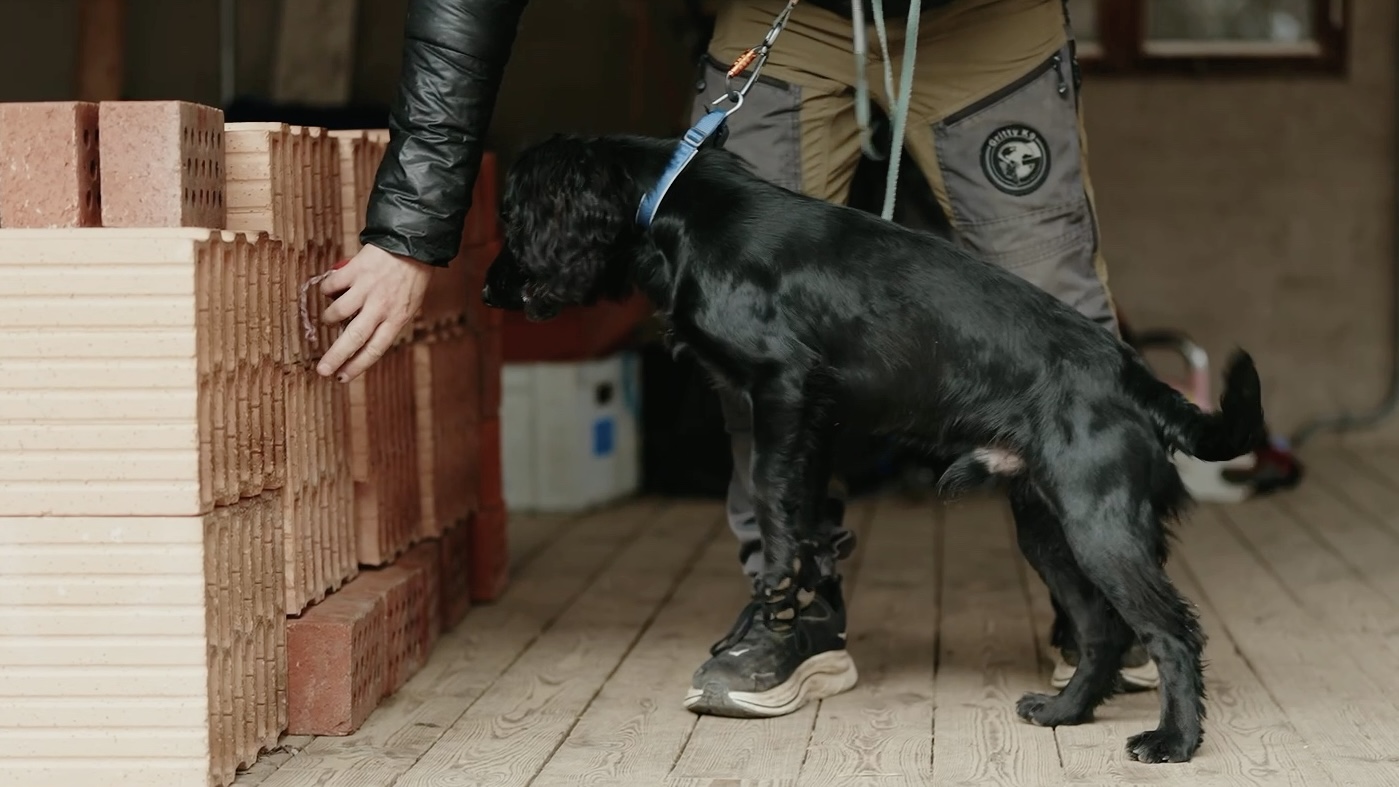
Search Development
Online course
How to train a highly focused and motivated detection dog.
View course
Indication Training — Sit and Stare
Online course
Everything you need to know about indication training for detection and tracking dogs.
View courseSign up and join the inner circle
You're not just on a list — you're in the room:
First access, before anyone else. Training days and live events fill up fast — often before we post about them. Subscribers hear first.
A real look inside the work. Once a month, we open up the operation: the travel, the placements, the training, the wins and the hard lessons.
Offers you won't see anywhere else. Subscriber-only pricing on courses, bundles, and gear — including drops we never announce publicly.
No spam. Unsubscribe anytime.