Search development: motivation first, then detail
 Tobias Gustavsson

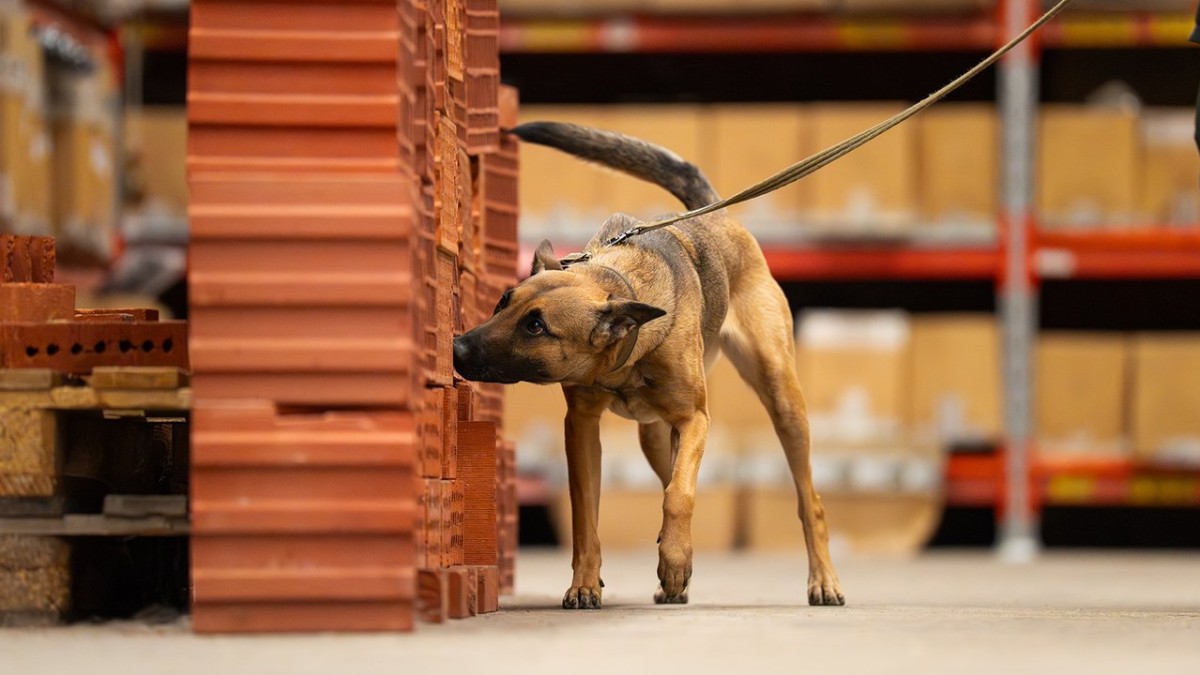
Search development for scent work: why motivation comes before detail, what a training scent is for, and two mistakes common at this stage.
Search development is the second phase of the foundations. It builds directly on the reward from play and reward development: a dog that loves its toy is ready to learn that searching is how it gets it.
This post is part of our foundation training series. For an overview of all the phases, start with Foundation training: where to start and what comes next.
Motivation first, then detail
Search development has two stages, trained in this order. First comes the motivation for searching and finding. Then comes detailed searching with a high sniffing frequency, which takes a lot of training.
The order matters. Teaching a dog to find small amounts of scent is not very difficult. Teaching it to do so with high drive and focus is something else, and that only comes from solid foundations and doing things in the right order.
Search development is also the phase where we start establishing start signals: one that asks for a free search, and one that asks for a detailed search. Stage 1 suits the first, Stage 2 the second, so your dog learns from the start what kind of search is expected of it.
Stage 1: motivation for searching and finding
What to aim for is a dog that searches consistently, without interruptions and without losing intensity. In the first part of this stage we train in the same place every time, to make use of contextual learning (more on that under expectancy below). From there, we gradually make the searches longer and the environments more challenging, mixed with short searches and quick finds.
Stage 2: detailed searching
A high sniffing frequency and a detailed search increase the chances that your dog catches the scent molecules from the target as it moves through the search area. An effective detailed search takes time to develop: your dog needs to learn the technique, and it also needs stamina. When your dog can keep up a detailed search for a long time without interruptions, it is ready for the next step.
High search intensity and stamina are also the foundation for an effective area search and for tracking. In both, the dog sometimes moves fast, and that is when a high sniffing frequency matters most.
Why we start with a training scent
During the foundations, the dog searches for a training scent rather than the target scent it will search for in operational work. Moving on to the target scent, imprinting, comes once the search behaviors are solid.
Using a training scent instead of the real material makes foundation training a lot easier. There is no need to think about safety or the permissions the real material often requires. A training scent also lets you train anywhere, giving your dog valuable experience of working in all kinds of environments and contexts, including public places where the real material can be difficult to hide.
Using pieces of the toy as the training scent gives intensity and motivation for free, as long as the dog reacts to a piece as if it had found the whole toy. That effect is what everything in this stage depends on.
Common mistake
Moving on to small pieces of the toy too quickly. A piece that is too small no longer reminds the dog of the toy, and the effect is lost: the dog might as well be searching for any neutral scent.
Signs to watch for: the dog passes over the piece without finding it, or lets go of the find when it is pulled away from it. How to work down to small pieces without losing the reaction is covered step by step in our Search Development course.
Expectancy: the place matters
Building your dog's expectancy for the context or location where the training takes place is especially important in search development.
Contextual learning can work both ways. During foundation training we use it to build expectations quickly: after only a few sessions in the same place, your dog knows exactly what happens there, and its expectations and motivation develop faster than if every session were somewhere new. Once the motivation for the task is high, training moves on to different locations.
Your part: handling
Search development trains your handling too. How you hold the leash, where you move and when you stop all tell your dog something. Leash tension can help build drive toward the search, but a handler who slows down or stops near the hide can become part of the cue without meaning to. What to aim for is a dog that works in front of you, undisturbed by you.
Training tip
Keep finding easy enough for the motivation to keep growing. Mixing short searches and quick finds in with the longer searches gives your dog plenty of chances to succeed, especially early on, so the motivation keeps building rather than wearing off.
Two common mistakes at this stage
Both are easy to make and slow to undo, which is why they are worth knowing before you start.
Two common mistakes
1. A reward that makes the dog look away from the find. If the reward system or signal teaches the dog that the reward comes from the handler, the dog turns to look at the handler at the find instead of staying focused on it. Where and how the reward is delivered is covered in the Search Development course.
2. Training on the end goal, not for the end goal. This one applies to every phase, but it is especially tempting here. Each session needs one clear purpose: is it about establishing a search behavior, or about something else? Behaviors are connected later, in sessions set up to do exactly that, once each one has had enough separate training.
Both risks are reduced by following the order of the phases: a strong reward from play and reward development, then a motivated search, before anything is connected.
The course for this phase
Our Search Development course takes you through both stages step by step:
Prefer a single recorded session? Our webinar Search development: how to build intensity, precision and stamina covers the principles and the progression in one session, including how much search development different dogs need before indication training. The webinar gives you the theoretical overview; the course shows you every step of the practical training as well. Also in Swedish: Webinarium – Sökutveckling.
Does your dog start its searches frantic rather than focused? Our webinar How to get a focused start and a less frantic search goes into that. Also in Swedish: Så får du lugna starter och mindre spring i sök.
Ready for the next step: indication training can start alongside search development, as a separate exercise, once your dog shows high motivation for the toy. Connect the indication to the search only when your dog shows very high motivation for searching, finding and biting the toy. Search development continues alongside indication training, and throughout your dog's career.
Foundation training series · Part 3 of 6
For the inside view of our training, join our newsletter at the bottom of this page.
Categories: : Guides and tips
Keep training
Courses and webinars built on the same foundations.

Play Development Package
Webinar package
How to develop strong, reliable and conflict-free rewards.
View course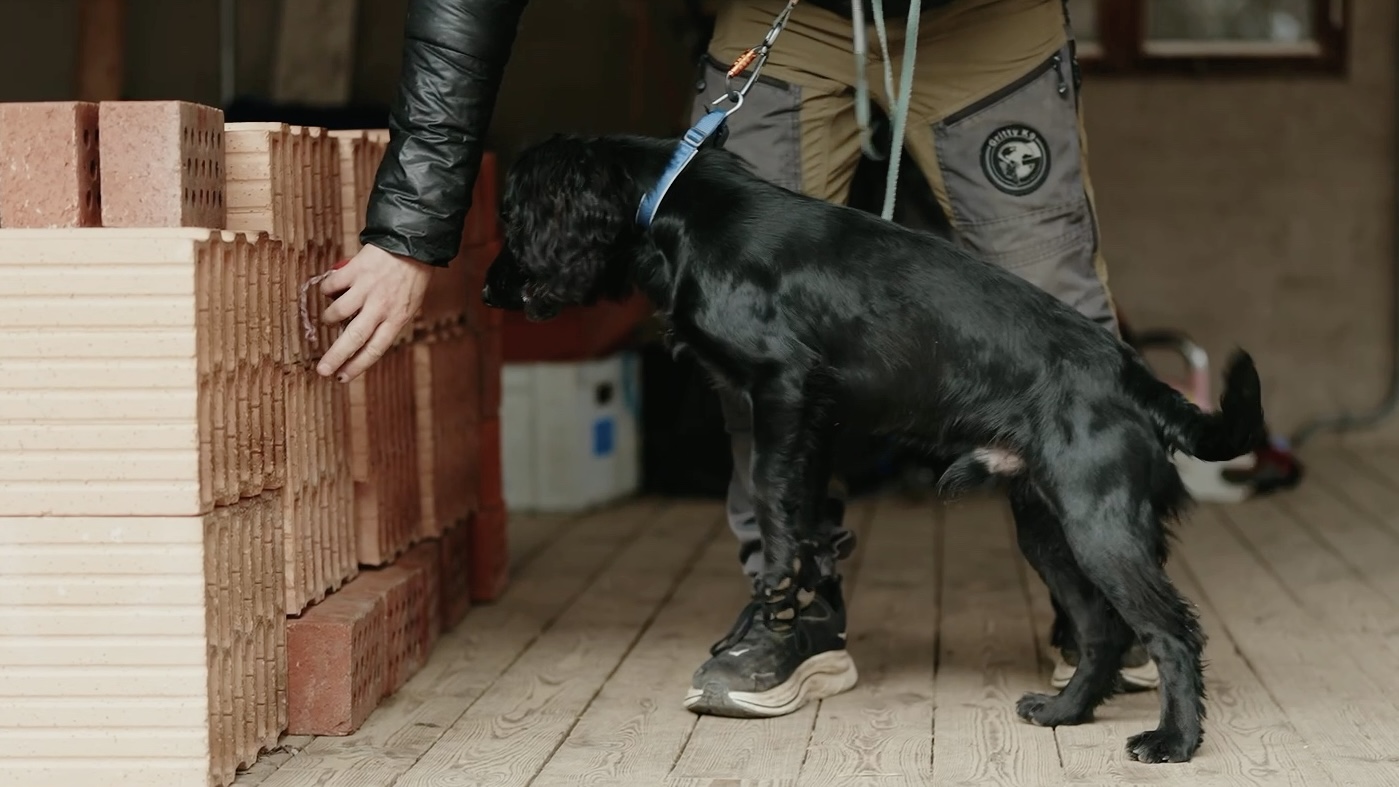
Search Development
Online course
How to train a highly focused and motivated detection dog.
View course
Indication Training — Sit and Stare
Online course
Everything you need to know about indication training for detection and tracking dogs.
View courseSign up and join the inner circle
You're not just on a list — you're in the room:
First access, before anyone else. Training days and live events fill up fast — often before we post about them. Subscribers hear first.
A real look inside the work. Once a month, we open up the operation: the travel, the placements, the training, the wins and the hard lessons.
Offers you won't see anywhere else. Subscriber-only pricing on courses, bundles, and gear — including drops we never announce publicly.
No spam. Unsubscribe anytime.