Systematics: searching with a plan
 Tobias Gustavsson

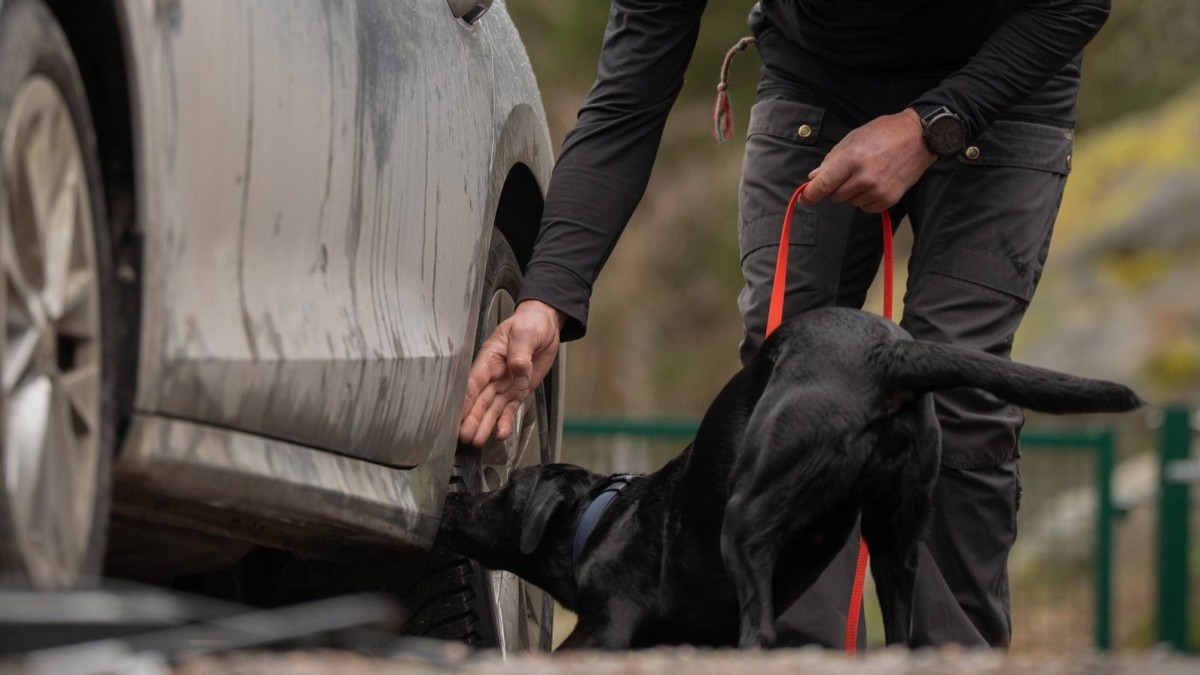
Systematics in scent work: what systematic search is, why it comes once searching and indication are solid, and how it fits the dog’s job.
Systematics is the fifth phase of the foundations. Once your dog searches with high motivation and has a solid indication, the foundations start pointing at the job your dog will actually do.
This post is part of our foundation training series. For an overview of all the phases, start with Foundation training: where to start and what comes next.
What systematics is, and why it matters
A systematic search follows a specific system. Your dog learns to search more slowly and more intensively, and you, as the handler, work closer to your dog and know exactly which part of an object or a room has been covered. You can also show your dog a part that hasn’t been searched in detail yet.
That matters most where detail matters most: searching objects such as vehicles, and searches where the amount of scent may be small or the hide well hidden.
Semi-systematic and systematic search
Systematic search covers a range, from semi-systematic search to detailed systematic search on leash. Both are the opposite of a free search, where your dog searches without a set pattern.
A systematic search means searching an area in a structured, planned way, to make sure the whole area is covered. The search pattern can look different depending on what you are searching for and in what environment. In a semi-systematic search, parts of the area are searched freely, without a pattern, and other parts more systematically.
Which kind your dog needs most depends on the job it will do. The target material, the environment and the context are examples of what to consider when deciding how to deploy your dog most effectively.
Things buried underground might be searched in a very detailed, strict pattern, while articles with human scent spread over a large area can be searched effectively without a specific pattern.
Matching the search to the job doesn’t mean training only that kind of search. A dog that will only ever search the ground still gains from training other systematic techniques, because each one adds to its development. Training a solid blocking technique on a scent wall, for example, is often when a dog’s sniffing frequency steps up to a new level.
Start signals: telling your dog which search
Start signals are introduced in search development, and in systematics they become essential. A dog that has done a lot of detailed searching can find it hard to switch to a free search: it gets stuck in intense sniffing on a small area. Different start signals avoid that. A precise signal tells your dog exactly where a detailed search starts; another tells it to search freely, without a pattern. The detailed search keeps paying off in the free search too: it makes the search effective for small amounts of scent, even at high speed.
With the indication in place, this is also the time to train free search with a full indication, not only the detailed search. Whatever the start signal, a find ends with an indication.
When to start
Start systematics once your dog searches independently, with high desire and motivation, and its indication is complete. Then the system adds precision to a search that is already strong.
What to watch for: a dog that pays more attention to you than to the search is telling you it needs more motivation work first. That takes you back to search development, not forward in systematics.
Common mistake
Starting systematics too early. A search pattern can’t create motivation; trained on top of a search that isn’t yet strong, it tends to slow the dog down and turn its attention toward the handler. A pattern can also put a kind of pressure on the dog, which some dogs are sensitive to while their motivation isn’t strong enough yet, just as with obedience.
Your part: handling
In systematics, your handling becomes part of the search. You set the system, you know what has been covered, and your pace has to suit your dog’s. What to aim for is a dog that works in front of you, unhindered: close enough for you to guide the search, with enough room for your dog to work.
One thing to keep in mind from the start:
Training tip
Aim for a set of tools that makes sure every search area is cleared: the ability to switch between anything from a guided, detailed search on leash to an effective free search off leash.
For tracking dogs
For a tracking dog, search development and indication now move on to human scent. Systematics here means your dog learns that following the footsteps in a focused, detailed way leads to articles, and that indicating them creates chances for a reward.
The webinar for this phase
Our webinar on systematic search covers everything from detailed search to free search: line-ups and the scent wheel, indoor and outdoor searches, with and without leash.
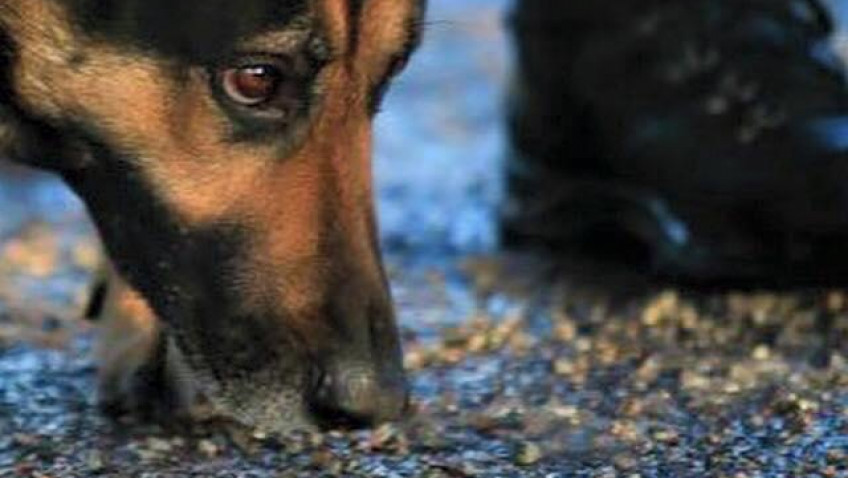
Ready for the next step: with systematics in place, the foundations are complete. They don’t stop there: play, socialization and your dog’s physical condition continue alongside, and maintenance keeps the foundations strong throughout your dog’s career.
Foundation training series · Part 5 of 6
← Previous
Indication training: why timing matters most
Next, published by December 15, 2026
Maintenance: foundations for a whole career
For the inside view of our training, join our newsletter at the bottom of this page.
Categories: : Guides and tips
Keep training
Courses and webinars built on the same foundations.

Play Development Package
Webinar package
How to develop strong, reliable and conflict-free rewards.
View course
Search Development
Online course
How to train a highly focused and motivated detection dog.
View course
Indication Training — Sit and Stare
Online course
Everything you need to know about indication training for detection and tracking dogs.
View courseSign up and join the inner circle
You're not just on a list — you're in the room:
First access, before anyone else. Training days and live events fill up fast — often before we post about them. Subscribers hear first.
A real look inside the work. Once a month, we open up the operation: the travel, the placements, the training, the wins and the hard lessons.
Offers you won't see anywhere else. Subscriber-only pricing on courses, bundles, and gear — including drops we never announce publicly.
No spam. Unsubscribe anytime.